SDA

SDA Eligibility: The Complete Guide to Qualifying for SDA Funding

SDA funding is for NDIS participants with extreme functional impairment or very high support needs. You must already be an […]


Brad Wainman Brad Wainman
Published 11 Jun 2025 Updated 30 Sep 2026 10 min read
70+ five-star
reviews on Google
SDA Eligibility: The Complete Guide to Qualifying for SDA Funding
70+ five-star
reviews on Google
On this page
Home directory
Find an SDA home near you

Browse live vacancies across every state and territory.

Search the directory Check my eligibility →

Quick summary

SDA funding is for NDIS participants with extreme functional impairment or very high support needs.

  • You must already be an NDIS participant, under 65, and living in Australia as a citizen, permanent resident or Protected Special Category Visa holder.
  • The NDIA must agree that mainstream housing, home modifications or other supports cannot meet your needs.
  • Evidence usually comes from an Occupational Therapist or allied health professional, plus a home and living supporting evidence form.
  • Approved funding is set by design category, building type, number of residents and location.
  • If you are declined, you can close the evidence gaps and request a review.

Specialised Disability Accommodation (SDA) are specially designed homes built to accommodate individuals with high support needs. It’s one of many available support options, which is why the NDIS (National Disability Insurance Scheme) has created an eligibility criteria to ensure SDA is the best fit for your needs.

Whether you’re just beginning to explore your options or preparing an application, knowing the SDA NDIS eligibility criteria is key to securing the right outcome and support.

Am I Eligible for SDA?

SDA funding is available to a small group of NDIS participants who have either:

Extreme functional impairment

Significant limitations in mobility, communication, self-care or other essential daily activities that impact independent living.

Very high support needs

You require one-on-one assistance for most of the day, and your informal support network is unable to provide this level of care.

To be eligible, the NDIS must determine that specialist housing is necessary because your needs cannot be met through mainstream housing options, home modifications or other supports alone.

The assessment considers your current circumstances, support requirements, long-term housing needs and whether SDA represents value for money when compared with alternative supports.

NDIS SDA Eligibility Assessment Checklist

Use this checklist to see if you may meet the NDIS criteria for SDA funding

✓ I am an NDIS participant or currently applying.
✓ I require ongoing support that cannot be effectively provided in standard housing.
✓ I would benefit from specialist housing features that improve safety, accessibility or independence.
✓ My support requirements are likely to be ongoing and long-term.
✓ I have an extreme functional impairment that significantly affects my daily living.
✓ My current housing does not meet my disability-related needs.
✓ I have evidence from an Occupational Therapist, Allied Health Professional or Specialist Assessor supporting my housing needs.
✓ SDA is likely to provide a better outcome than alternative housing solutions.

If you answered “yes” to most of these questions, you may be eligible for SDA funding and should discuss your options with your support coordinator, planner or housing specialist.

Want the checklist to take with you?

Download the SDA Eligibility Checklist and bring it to your planning meeting.

Download the checklist

How the SDA Eligibility Process Works

The pathway to SDA funding typically follows these steps:

1
Become an NDIS participant (if not already)

You must be an NDIS participant before SDA funding can be considered.

 
2
Complete a functional assessment

An Occupational Therapist or relevant specialist will assess how your disability affects your daily living and housing requirements.

3
Gather supporting evidence

Reports and assessments help demonstrate why specialist housing is necessary and how SDA will improve your outcomes.

4
Submit evidence to the NDIS

Your Planner, Support Coordinator or representative can help submit the required documentation. See our guide on how to apply for SDA funding.

5
NDIS reviews your application

The NDIA reviews your evidence against SDA eligibility criteria and determines whether SDA funding is reasonable and necessary.

6
SDA funding is included in your plan

If approved, SDA funding will be added to your NDIS plan.

7
Choose your SDA home

Once funding is approved, you can begin exploring SDA homes that align with your support needs, preferences and goals.

Ready to start the application?

Our team can help you assemble the evidence and understand what to expect at each step.

How to apply guide
Check your eligibility now
Not sure if you qualify?

Use our free SDA Eligibility Calculator to receive an instant indication based on your circumstances and support needs.

Check my eligibility

SDA Eligibility Criteria

The first step of SDA eligibility is to be an NDIS participant. For this, you must tick the following criteria.

You must
✓ You must be under 65 years of age
✓ You must be an Australian citizen, permanent resident or Protected Special Category Visa holder
✓ You must be living in Australia
And your support needs must
✓ Your support needs are caused by a permanent impairment
✓ You often need disability related support to carry out daily life activities
✓ You need disability-related support to improve, maintain or prevent your functional capacity from getting worse

If these requirements apply to you, the next step is to explore whether you may be eligible for specific NDIS supports, such as SDA.

SDA Housing Eligibility Requirements

The NDIS generally considers two key areas when determining SDA eligibility. That is, if you have an extreme functional impairment and/or if you have very high support needs.

Extreme functional impairment

This refers to significant limitations in mobility, communication, self-care or other essential daily activities that impact independent living.

Very high support needs

This means you require one-on-one assistance for most of the day. It also indicates that your informal support network (such as friends or family) is unable to provide this level of care. Additionally, SDA must play a role in reducing safety risks for you or those around you.

SDA Needs Requirements

To be considered for SDA funding, you’ll need to go through an NDIS SDA eligibility assessment. As part of this process, the NDIA will determine whether SDA is the right support for you based on how well you meet the needs criteria – think of it like a checklist for SDA eligibility.

According to the NDIA, SDA is considered necessary if it helps you to:

✓ Improve, maintain or prevent your functional capacity from getting worse
✓ Lower your amount of support you’ll need in the future
✓ Build stronger connections with both informal supports (like family and friends) and formal supports (like health services)
  • If you believe living in an SDA home would help you achieve this outcome, you may be eligible for NDIS SDA funding.

NDIS Funding Criteria

To receive SDA funding, you must meet the NDIS funding criteria. This isn’t specific to SDA but applies to various NDIS supports. Think of it as an eligibility checklist for funding. When it comes to SDA, participants typically need to meet the following requirements:

If you require wheelchair-accessible housing due to limited mobility, SDA funding can cover a home with wider doorways and ramps. However, if your partner wishes to live with you, they will need to pay rent directly to the SDA provider.

If your NDIS goal is to live independently, SDA can provide a home designed to support that, such as an apartment with assistive technology.

If you want to work or study but need accessible housing near public transport, SDA can support that by funding a home in a well-connected area.

Instead of paying for round-the-clock in-home support, SDA might fund a fully accessible apartment, reducing long-term costs and providing better support.

If your family home is not wheelchair accessible and can’t be modified, SDA can provide a purpose-built home to meet your needs.

If you need a home with ceiling hoists and smart technology for independence, SDA ensures you live in a space that meets those specific needs.

If the support helps you directly and meets your individual support needs – rather than supporting your family or disability support workers – the NDIS may consider it reasonable and necessary.

When reviewing your funding eligibility, the NDIS assessor will look at these factors to decide if SDA funding is the right fit for your needs. They may also explore other types of support that might work better for you. If that happens, they’ll discuss it with you and your support team.

Understanding SDA Eligibility and Design Categories

SDA is built within four categories: Improved Liveability, Fully Accessible, High Physical Support and Robust. Each of these categories contains specific design features, creating a home customised to support your unique needs. When accessing eligibility, the NDIA will look at how the features of each design category would reduce your support needs.

IL

Sensory, intellectual or cognitive impairment

Improved Liveability

IL homes provide a reasonable level of physical access plus additional features that promote safety, comfort and easy wayfinding. Doorways, handles and switches are clearly visible so moving through the home is seamless.

Key design features

● All corridors and passageways must be at least 120cm wide
● Luminous contrast of at least 30% between two surfaces (e.g. door leaf and door frame)
● Solid glazing strips over large areas of glass
● Colour contrast between the floor and wall

Highline, Westmead

High-contrast joinery · wide sightlines · task-lit kitchen

FA

High physical impairment

Fully Accessible

FA homes focus on a high level of physical access. They are step-free throughout and include modifications that make everyday movement and use straightforward — particularly beneficial for wheelchair users.

Key design features

● No stairs anywhere in the dwelling
● Wider doorways with at least a 90cm opening
● Bathroom and kitchen usable seated or standing
● Automated doors, lights and blinds where needed
● SDA bedroom clearance of 4070 x 3100 mm

Orchard Terrace, Subiaco

Step-free entry · 90cm doorways · roll-under benches

HPS

High physical impairment with critical support needs

High Physical Support

High Physical Support (HPS) is the most comprehensive SDA design category built for participants with higher support needs. This category is most compatible if you often require additional support and specialised equipment for day-to-day activities.

Key design features

● Hoist-ready bedrooms
● Minimum door entry opening of 950mm
● Uninterruptible Power Supply (UPS) Systems
● Assistive Technology (AT) provisions
● Intercom

Highline, Westmead

High-contrast joinery · wide sightlines · task-lit kitchen

Robust

Autism, mental health and psychosocial conditions

Robust

Under the SDA Design Standard, the Robust design category addresses the needs of participants who may present with complex behaviours or psychosocial disability, such as Autism or mental health conditions. This design category ensures that homes are built to support not only participant safety and comfort but also the long-term durability of the property.

Key design features

● Kitchen benchtop and cabinetry must be made of robust materials
● The main bedroom must be sound-insulated
● Windows must be made of shatter-free material such as laminated glass or polycarbonate
● Fittings and fixtures such as sink tap must be durable and vandal proof

Highline, Westmead

High-contrast joinery · wide sightlines · task-lit kitchen

For a side-by-side comparison of all four, see the SDA design categories guide.

SDA Funding Levels

Once SDA funding is approved, the amount of funding available depends on the type of SDA dwelling and the design category that best matches your needs.

Funding levels vary based on factors including:

Factor Examples Impact on funding
Design category Improved Liveability, Fully Accessible, Robust, High Physical Support Higher support needs generally attract higher funding
Building type Apartment, Villa, House, Group Home Different dwelling types have different funding levels
Number of residents 1–5 residents Shared arrangements affect funding calculations
Location Metro, Regional, Remote Location factors are applied to SDA pricing

The exact SDA funding amount is calculated using NDIS pricing arrangements and depends on the combination of these factors. Funding levels are reviewed and updated annually by the NDIA.

What SDA funding covers, and what it does not

It helps to be clear on what SDA funding actually pays for, because it is often confused with support funding. SDA funding covers the home itself, and it is paid to your SDA provider, who owns the dwelling and rents it to you. It does not pay for your support workers or day-to-day care, which is funded separately.

Keeping the two apart is deliberate, and it works in your favour: you choose your home and your support provider independently, so you are never locked into one because of the other.

 
SDA funding covers
✓ - The dwelling itself and its accessible design features
✓ - Building maintenance and compliance with the SDA Design Standard
SDA funding does not cover
✕ - Support workers or personal care (funded separately, usually through SIL or Core supports)
✕ - Everyday living costs. You also pay a capped reasonable rent contribution to your provider

For the dollar detail on the rent contribution and price limits, see the SDA pricing guide.

SDA and SIL: which one covers what

SDA and SIL are often mentioned together, but they do different jobs. SDA is the home. Supported Independent Living (SIL) is the support delivered inside it. You can receive one without the other, though many people eligible for SDA also receive SIL.

 
SDA Bricks and mortar
Specialist Disability Accommodation
● Funds the physical dwelling and its maintenance
● Paid directly to your housing provider
● Tied to a design category and an enrolled property
SIL People and support
Supported Independent Living
● Funds paid personal support and daily living help
● Covers tasks like household chores and personal care
● Delivered by your chosen support provider, not your landlord

For the full breakdown, see SIL vs SDA and why SIL funding differs between housemates.

If your SDA Application was Declined

If your SDA funding application has been declined, you’re not alone. Many participants are initially found ineligible because the NDIA requires further evidence to demonstrate extreme functional impairment, high support needs, or the need for SDA.

That’s why we’ve created our SDA Review and Appeals Program. Our team can help you understand why your application was declined, identify any gaps in the evidence provided to the NDIA, and explore your options for review or appeal. In some circumstances, we may also be able to offer an interim housing solution while you work towards securing the SDA funding you need.

Declined and not sure why?

Our SDA Review and Appeals Program helps you close the evidence gaps and reapply.

See the appeals program

Why choose Enliven for your SDA journey

Working out your eligibility is only the start. Here is how we help from there, whatever the outcome of your application.

 
Help if you are declined

Many people are knocked back the first time because the NDIA wants more evidence. Our SDA Review and Appeals Program helps you understand why, close the gaps and reapply, and in some cases we can offer an interim home while you do.

We guide you through eligibility

Our team helps you make sense of the criteria, gather the right evidence with your OT and support coordinator, and understand your options, at no cost and no pressure.

Homes ready when you are approved

We build and provide blended Improved Liveability, Fully Accessible and High Physical Support homes across the country, so once your funding is in place, there is a real home waiting.

Choice and control

We do housing and tenancy only, so you choose your own support provider and shape shared support through the Choice Collective. We are 100% pet friendly and do not outsource.

The Enliven difference

Why choose Australia’s most trusted SDA housing provider

✓ Most 5-star reviewed
✓ 100% pet friendly
✓ Friendly landlord model
✓ We don’t outsource

Frequently Asked Questions

An SDA eligibility assessment checklist helps participants understand whether they may meet the key requirements for SDA funding before beginning the formal application process with the NDIS.

You may qualify if you have extreme functional impairment or very high support needs and require specialist housing that cannot be provided through other housing options.

The primary criteria focus on extreme functional impairment, very high support needs and evidence demonstrating that SDA is the most appropriate housing solution.

Eligibility refers to whether you meet the NDIS criteria. Funding approval occurs after the NDIA reviews supporting evidence and includes SDA funding in your plan.

The time it takes to assess SDA eligibility can vary from person to person. Factors such as the complexity of your circumstances and how quickly supporting evidence can be collected and reviewed may affect the timeframe.

If your application is not approved, you may be able to provide additional evidence or request a review of the decision. Enliven has created the Appeals Program to guide and support you through this journey.

Yes. You have the option to seek a review of your NDIA decision and provide further supporting information. Enliven has created the Appeals Program to guide and support you through this journey.

Evidence may include occupational therapy assessments, specialist reports, functional assessments and supporting documentation outlining your housing and support needs.

Not necessarily. Participants may qualify through extreme functional impairment, very high support needs, or a combination of both depending on their circumstances.

Funding levels will be different depending on the SDA design category, dwelling type and location. These factors would of been considered in your approved funding when the NDIA reviewed your application.

SDA homes must meet specific design requirements set by the NDIS. These can include accessibility features, room sizes, assistive technology and building materials. The exact requirements vary depending on the SDA design category, but all SDA homes must comply with the SDA Design Standard.

Ready to Explore Your SDA Options?

Understanding NDIS eligibility is an important step in identifying the supports available to you. SDA isn’t a one-size-fits-all solution – it includes a range of design categories and housing models within the NDIS, and your eligibility may apply to only certain types.

At Enliven Housing, we’re here to help you navigate these options. Our friendly team will support you throughout your entire journey – from understanding your NDIS SDA eligibility to helping you settle into a home that supports your independence and well-being.

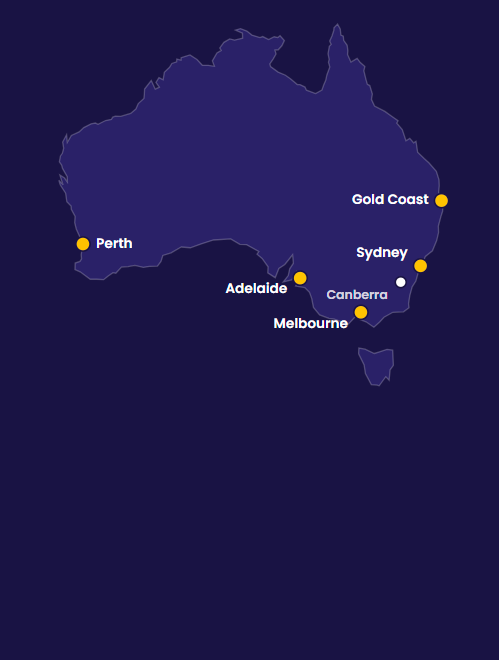
If you’re curious about eligibility, our quick and easy SDA Eligibility Calculator can guide you in the right direction – it takes less than 60 seconds. At Enliven Housing, we provide SDA homes across NSW, VIC, ACT, WA, SA and QLD. If you’re ready to explore your eligibility or want support understanding the process, get in touch or send us an enquiry to start your SDA journey today.

Speak to our team
Speak to our team

Not sure where you sit in the process? A ten-minute call with our team will tell you what to do next.

Related blog posts

All resources →
Enliven Housing Launches New Support Coordinator Hub
News
Enliven Housing Launches New Support Coordinator Hub

We’re excited to introduce the new Enliven Housing Support Coordinator Hub – a dedicated online space designed to make navigating Specialist Disability Accommodation (SDA) easier for Support Coordinators. We work with Support Coordinators every day, and we know how important…

Why Is My SIL Funding Different to My Housemate’s?
SDA
Why Is My SIL Funding Different to My Housemate’s?

One of the great things about shared living is that everyone's support can be tailored to their individual needs. That means even if you and your housemate live in the same home, your NDIS plans may look quite different.You might…
Shared Living and Supports: How They Work Together
SDA
Shared Living and Supports: How They Work Together

If you're exploring shared living, you've probably come across terms like SDA, SIL and ILO. Understanding what each one means can feel confusing at first, especially when they're often explained separately.Shared living is a living arrangement where you share a…
Group Home vs Shared Living: What’s the Difference?
SDA
Group Home vs Shared Living: What’s the Difference?

If you have been searching for a disability group home, you have probably noticed the term pops up everywhere, often meaning slightly different things. You may also have come across "shared living" and wondered whether it is just another word…

Housemate Matching and Compatibility: Who Will I Live With?
SDA
Housemate Matching and Compatibility: Who Will I Live With?

For a lot of people, this is the question that matters most about shared living. Not the funding, not the building, but the people. Who will I actually live with? What if we don’t get along? And can I choose…

Feedback Form

"*" indicates required fields

Request a Call Back

"*" indicates required fields

Name*